Selected work / Case study
A Resale Workflow for the Clothes We Outgrew
Joshua Sigler
Problem
Listing unused clothes one item at a time took too much hands-on effort.
Decision
Start with photos, draft listings and prices, then edit and track inventory in Notion.
Evidence
Sales on Depop and Vinted, with orders packed and shipped.
From photos to a shipped order
Codex prepares a first pass. I make the decisions about what gets listed and follow through after a sale.
Tools I usedCodexNotion
- 01
Photos
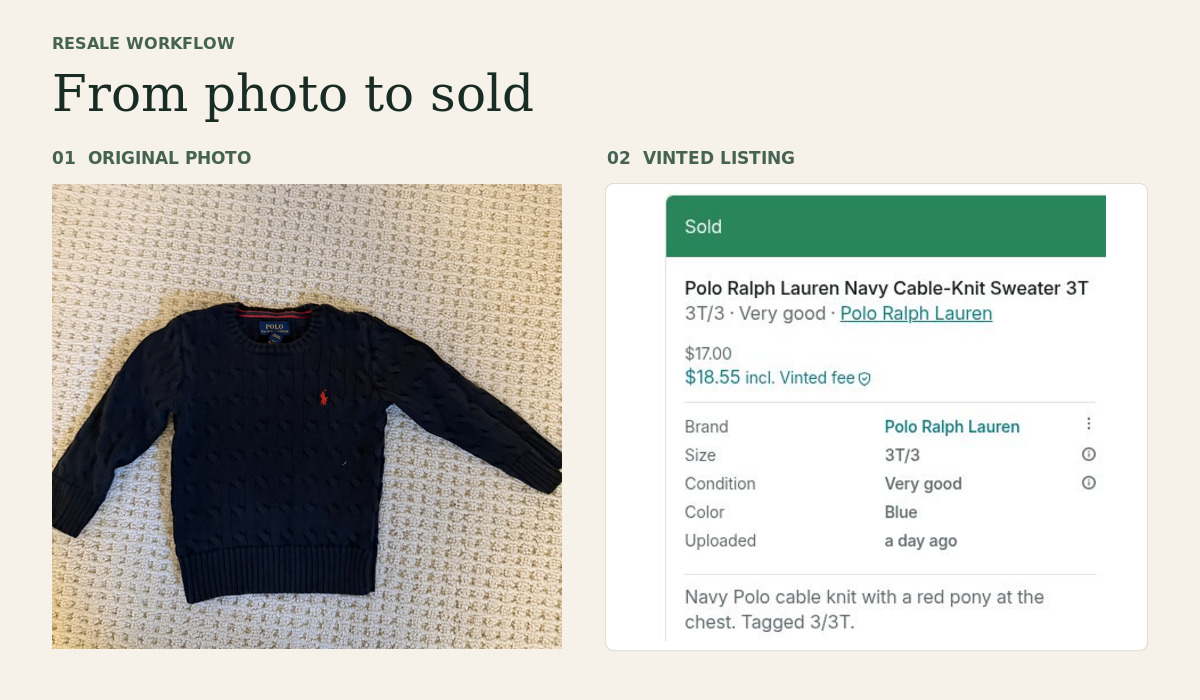
I put a few item photos in a folder.
- 02
AI-assisted research and draft
Codex researches comparable prices and drafts the listing.
- 03
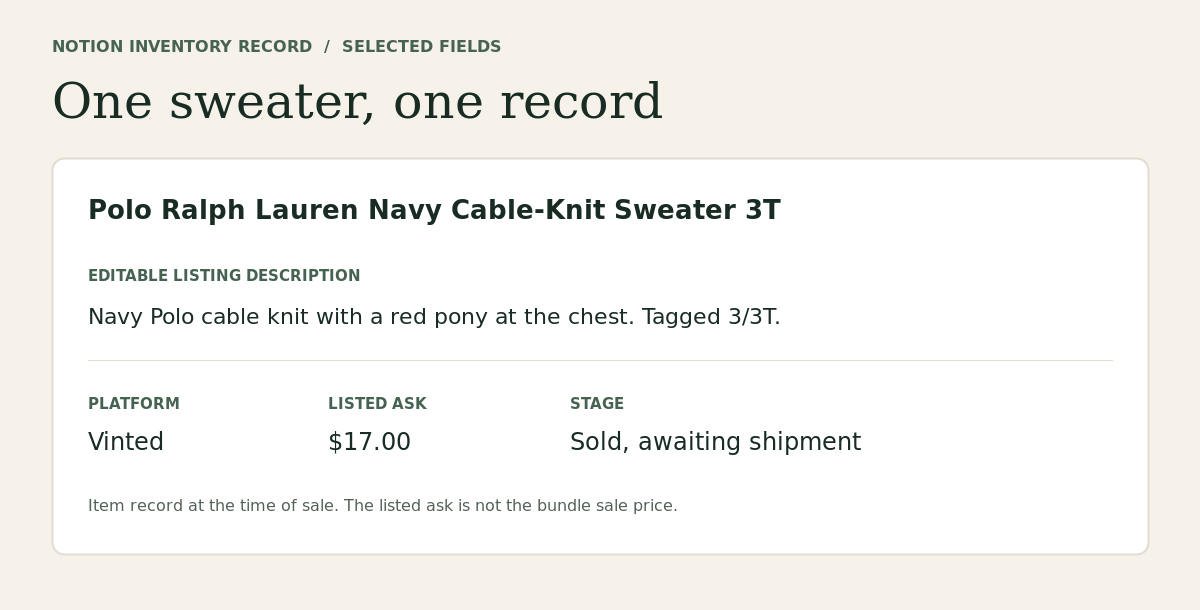
I review and edit in Notion
I check the details and decide what is ready.
The workflow suggests a price from comparable listings. I can adjust it in Notion before approving the listing.
- 04
Marketplace listing
I approve what goes live on Depop or Vinted.
- 05
Sale alert and manual fulfillment
A marketplace alert tells me when it is time to pack and ship.
At some point this summer I realized we had two piles of clothes taking up space: kids’ clothes we’d outgrown as a family, and clothes I’d bought for myself that didn’t fit anymore. A friend told me he’d been having luck selling his clothes on Depop. I was curious whether I could do the same without making it my evening job.
I used Codex to build a workflow around the part I could realistically keep doing: take a few photos and put them in a folder. The workflow researches comparable prices and writes a listing for each item. I use Notion to edit what it comes up with and keep track of what actually sells.
Start with the photos
If I had to sit down and fill out a form for every item before anything happened, the pile was going to stay a pile. So the photos became the starting point. I could take them when I had time, drop them in a folder, and pick up the rest later.
Once the photos are in, the workflow researches comparable items and suggests a price for each one. It also writes the listing. My friend’s Depop posts were a starting point for the voice, and looking at other listings helped me see what a buyer needs right away: size, condition, and the details that make this particular item worth a look.
I no longer have to start each item by searching for comps or staring at an empty description. I can spend that time on the few decisions that need me.
Use Notion as the back office
I needed somewhere to go after the draft was written. A folder was a good way to get photos in, but it couldn’t tell me what was still for sale, what had sold, or which price I wanted to change. Notion became the place I go to manage the inventory and work on the listings.
If the draft doesn’t sound like me, I can rewrite a line. If I get feedback or want to try a different price, I can edit the item without starting over. That was an important part of making the workflow feel usable: the first pass can happen without me, and I still have a place to make the changes that matter.
Two storefronts for different buyers
I started with Depop because that was where my friend had found buyers. As I talked with other families about where they bought and sold clothes, Vinted kept coming up. That gave me a reason to try a second storefront instead of putting everything in the same place.
I could keep the same intake process and decide where an item belonged once I’d looked at it. Depop was where I started with my own clothes and shoes. Vinted gave us a place to try kids’ clothes and bundles. A single piece someone has been looking for and a bundle of clothes in the same size are two different shopping trips. It made sense to treat them that way.
Follow the order all the way through
Once something sold, the marketplace alert told me it was time to pack it up and get it out the door. That last part was still on me. I could work on listings in batches, but fulfillment needed to happen when an order came in.
We’ve had real sales on both marketplaces, including individual items on Depop and a kids’ clothing bundle on Vinted. I’ve packed and shipped orders, and at least one Depop order has made it all the way to delivery. That was the check I cared about: could I take something that had been sitting around, get it in front of the right buyer, and follow through when it sold?
What I’d measure next
For the next batch, I’d track how much hands-on time it takes to go from photos to a live listing, how often a listing needs rework, and what we actually keep after fees and any shipping costs. I’d also compare bundles with individual listings for kids’ clothes. If I can get several pieces out the door with one round of photos, one listing, and one package, that might be the better choice even if each piece could sell for a little more on its own.
I started this because there were clothes in the house we weren’t using. Now I have a way to see a pile of clothes and know what I’ll do with it next. That’s enough reason to try another batch.